
We previously wrote about HTML as shared context for humans and models. Speedrun is pushing that idea further.
HTML is not only a way to store context. For structured visual experiences, it can be the production medium itself.
That matters because Speedrun is not simply a video-generation problem. A digest has presenter sections, but it also has slides, cards, tables, timelines, visual explainers, transitions, and motion graphics. Some of those pieces are footage. Many are structured visual communication.
Those should not all be treated the same.
HTML Links People And Models
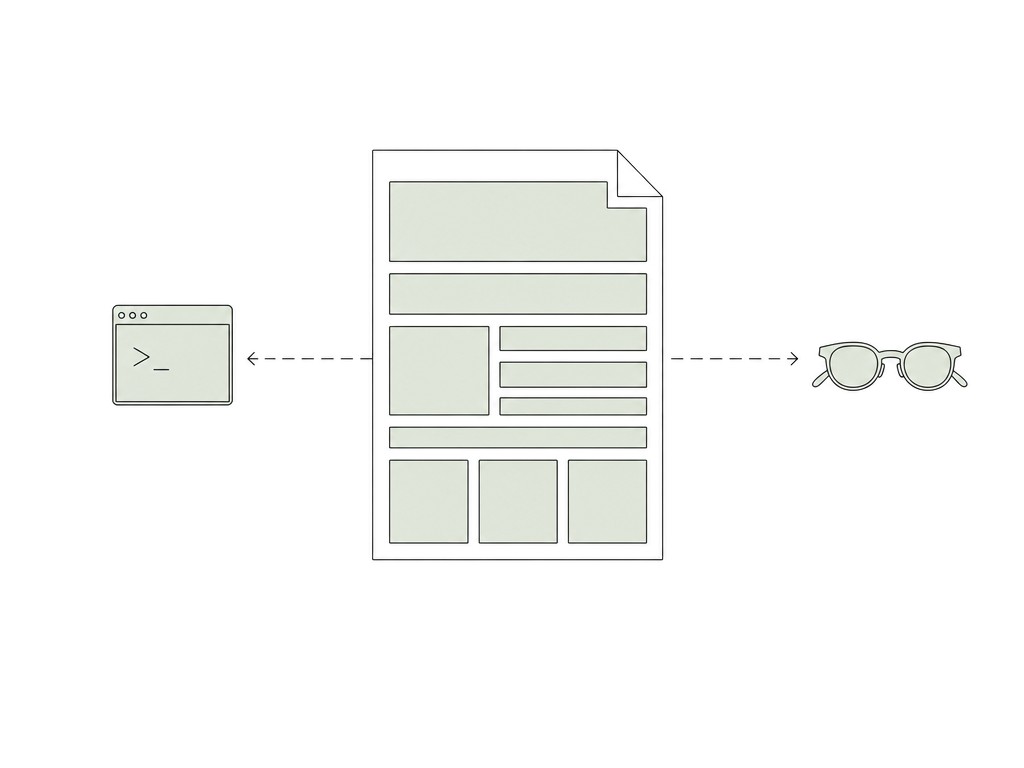
HTML works unusually well on both sides of the human-model loop.
For people, it is visual, configurable, interactive, and mature. A browser can show the work directly. A designer or builder can inspect spacing, hierarchy, motion, color, timing, and responsiveness. The medium has decades of tooling behind it, and the surface is immediately understandable.
For models, HTML is structured and explicit. The model can reason about headings, sections, lists, styles, components, hierarchy, and constraints. It can change one part of the scene without regenerating everything. It can produce variants inside a known structure. It can be asked to repair overlap, adjust layout, or swap a component while preserving the rest.
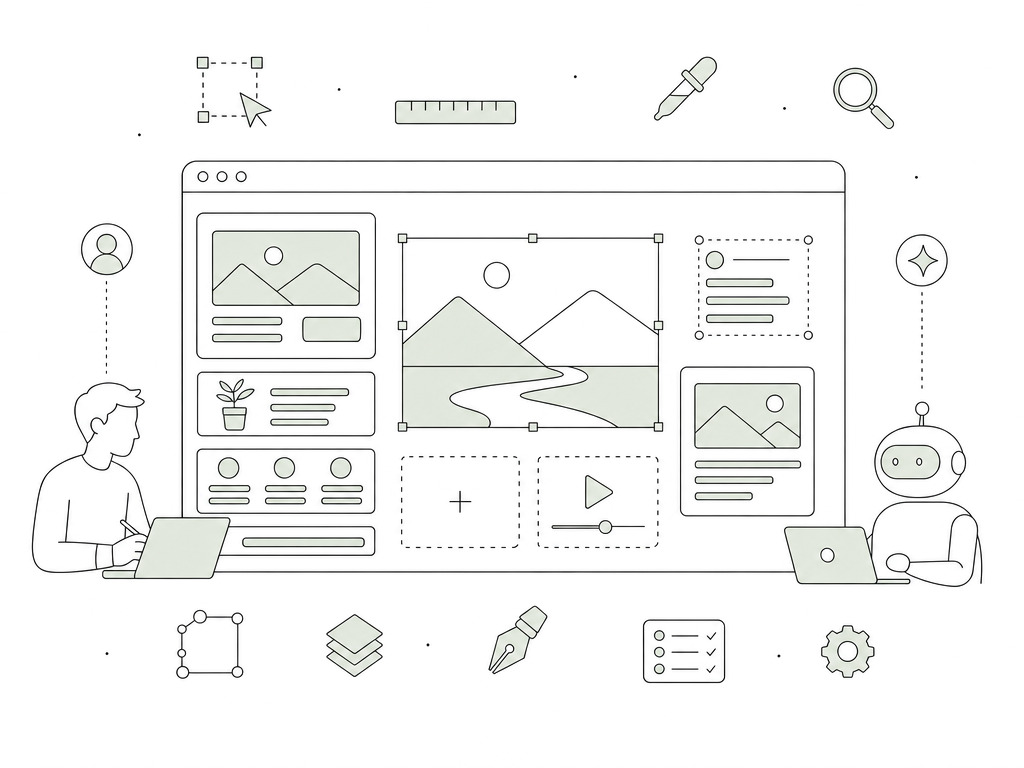
That combination is rare. The same artifact can be shown to a person and manipulated by a model.
Structure Wants A Structured Medium
The mistake is sending every visual decision to the same kind of generator.
If a segment needs a realistic person speaking, HTML is not the right medium. Presenter footage, lip sync, facial motion, and embodied delivery need video or avatar systems. Trying to recreate that in HTML would be the wrong abstraction.
But if a segment is a visual explanation, a comparison, a timeline, a table, a recap card, or an animated diagram, HTML is often a better medium than generated video. Those pieces need precision. They need editability. They need layout rules. They need consistent components. They need QA.
HTML gives those things natively.
It also gives the team more creative control. Structured visuals do not have to be static. They can animate, sequence, respond to timing, adapt to different layouts, and preserve a coherent design system. The creative range comes from composition and motion under control, not from asking a video model to guess the whole scene.
Efficiency Is Not The Main Point
HTML can reduce waste, but that is not the main reason it matters.
The stronger reason is control. A generated video clip is hard to inspect and hard to repair. If a layout is wrong, the fix often means regenerating the scene. If text overlaps, the failure may only appear after the generation has already happened. If the style drifts, the correction is indirect.
With HTML, the scene is an object the system can work on. The DOM can be inspected. Styles can be changed. Components can be reused. A QA loop can check for overflow and line breaks. A model can make a narrow edit instead of recreating the whole output.
That makes the workflow more precise, but it also makes it more creative. Fast iteration creates more room for taste.
The Medium Should Match The Segment
The useful pattern is routing.
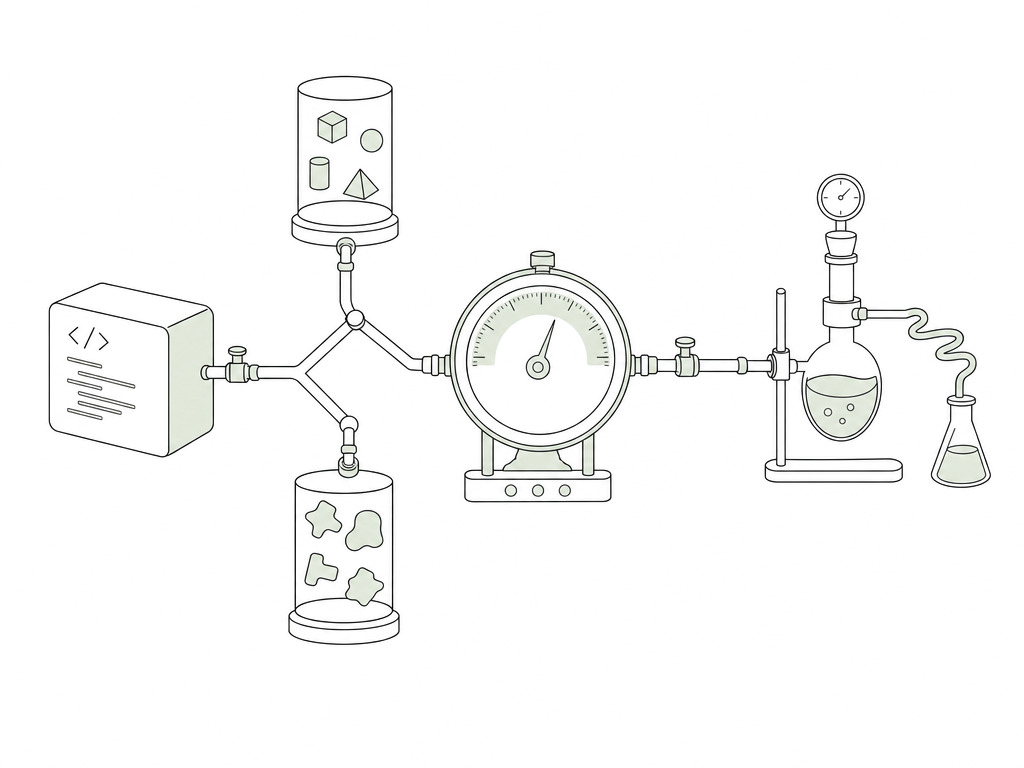
Use video models where the output is footage. Use image models where the output is a single scene or illustration. Use HTML where the output is structured visual communication.
That is the extension of our earlier HTML argument. HTML is useful as shared context because people can read it and models can understand it. Speedrun shows the same property in production. HTML can be a medium that people review, models manipulate, and users experience directly.
It links the human and model parts of the system without flattening the work into text or hiding it inside opaque media.
That is why it belongs in the production stack.